A Tongue-Tie Isn’t About How It Looks. It’s About How It Functions.

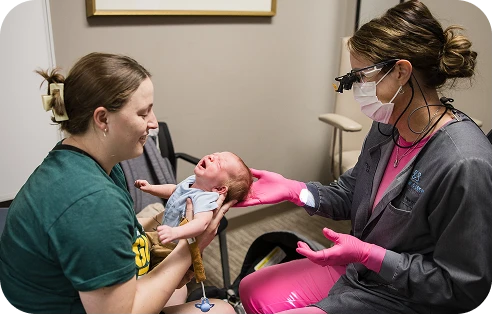
Our Spring Valley, Wisconsin team provides tongue- and lip-tie evaluations and in-house myofunctional therapy for children and adults. We look at function, discuss your concerns, and explain which next steps fit your needs.

It’s Not About The Tie. It’s About What The Tie Is Preventing.

Function Matters More Than Appearance
Many people have been told they or their child have a tongue-tie or lip-tie. The important question isn’t whether a tie exists. The important question is whether it’s affecting function. A restricted tongue or lip can influence feeding, swallowing, oral posture, breathing patterns, speech development, sleep quality, facial growth, and overall comfort.
Some people benefit from treatment. Others do not. That’s why our focus is not simply identifying a tie. It’s understanding how that restriction may be affecting function and determining the most appropriate next step. Every recommendation begins with a comprehensive evaluation and a conversation about your goals, symptoms, and concerns.

Common Signs By Age

Different Ages. Different Clues. Same Goal: Understanding Function.

01

Infants

Possible signs may include:
  • Difficulty latching
  • Painful breastfeeding
  • Poor milk transfer
  • Prolonged feeding sessions
  • Clicking sounds while feeding
  • Reflux symptoms
  • Excessive gas or fussiness
  • Poor weight gain
  • Colic and Frequent awakenings

02

Children

Possible signs may include:
  • Mouth breathing
  • Snoring
  • Restless sleep
  • Teeth grinding
  • Picky eating or texture sensitivities
  • Speech concerns
  • Crowded teeth
  • Open-mouth posture
  • Bedwetting and ADHD-like symptoms

03

Teens & Adults

Possible signs may include:
  • Chronic neck or facial tension
  • Jaw discomfort
  • Clenching and grinding
  • Difficulty maintaining nasal breathing
  • Poor sleep quality
  • Fatigue
  • Oral posture concerns
  • Difficulty swallowing comfortably

Not every symptom is caused by a tongue or lip tie. Our goal is to determine whether oral restrictions may be contributing to the bigger picture..

A Functional Evaluation, Not A Quick Diagnosis

Understanding How Everything Works Together

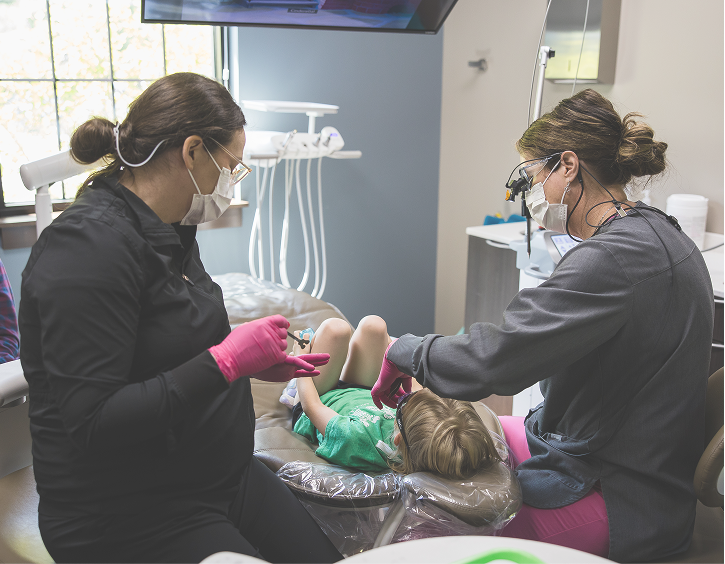
A functional evaluation considers tongue mobility, resting posture, swallowing, symptoms, and your care history. Finding a tie does not automatically mean a release is appropriate. We discuss whether therapy, monitoring, further assessment, or a procedure makes sense for your findings.

Before your visit, complete the intake forms and tell Dr. Skow and Missy what brought you in. Bring details of previous evaluations, treatment, and concerns about feeding, speech, swallowing, sleep, or muscle tension. Our evaluation preparation guide explains what to share.

Planning your visit from a nearby city

Our tongue- and lip-tie evaluations and in-house myofunctional therapy for children and adults take place in Spring Valley, Wisconsin. If you live in Hudson, River Falls, Menomonie, or Eau Claire, contact our team before making the trip to discuss your concern, the appropriate appointment, and what records to bring.

If therapy is recommended, ask about the expected visit schedule and follow-up needs so you can plan travel. Find our office and contact details.

We evaluate:

Oral Posture

We assess where the tongue rests between activities and how that differs from its movement during a swallow. Both observations help guide an individualized plan. Learn about tongue posture and tongue thrust.

Care Coordination

When appropriate, we collaborate with lactation consultants, myofunctional therapists, speech-language pathologists, bodywork providers, and other healthcare professionals.

Tongue Mobility

How well the tongue moves, elevates, extends, and functions during daily activities.

Swallowing Patterns

Functional swallowing habits and muscular coordination.

Breathing Habits

Whether breathing occurs primarily through the nose or mouth and how that will influence development and health.

Airway Considerations

How oral function, posture, and mobility may relate to breathing and sleep quality.

Why Myofunctional Therapy Matters

Because Lasting Results Depend On More Than A Procedure

We provide in-house myofunctional therapy for children and adults in Spring Valley, Wisconsin. Dr. Skow compares this work to physical therapy: people start with different strengths, movement patterns, and goals, so they need different plans.

Therapy may focus on tongue resting posture, lip function, and swallowing habits. Exercises are selected from your evaluation and adjusted with progress. A release does not automatically change a learned movement pattern; when appropriate, therapy may be recommended before or after a procedure, or without a release.

Therapy does not replace medical assessment for breathing difficulties or an indicated speech-language evaluation. Read how myofunctional and speech therapy differ.

A tongue release does not automatically teach the tongue how to function differently. That’s where myofunctional therapy becomes valuable. Myofunctional therapy focuses on retraining the muscles and habits involved in breathing, swallowing, oral posture, and facial development. For some patients, therapy may be recommended before a release. For others, therapy is essential after treatment to support healing and long-term success. In some cases, myofunctional therapy alone may be the most appropriate recommendation.
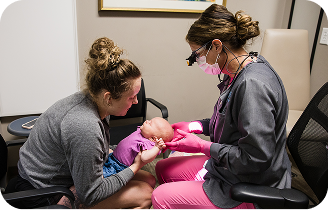
Our myofunctional therapist, Missy, was trained through The Breathe Institute and is a graduate of MyoMasterminds. She is also an ambassador for The Breathe Institute and participates in annual research updates, continuing to expand her knowledge of airway, breathing, and oral function.
Myofunctional Therapy May Focus On:
The goal is to help the body establish healthier functional patterns that support long-term outcomes.

When A Frenectomy Is The Right Next Step

Comfort-Focused Treatment With Structured Support

If a functional restriction is identified and treatment is appropriate, a frenectomy may be recommended. A frenectomy is a procedure that releases restrictive tissue beneath the tongue or lip to improve mobility and function. Our approach focuses on patient comfort, education, and comprehensive support throughout the process.
What To Expect

Before Treatment

During Treatment

After Treatment

The procedure itself is only one part of the process. Long-term success depends on healing, function, and proper follow-up care.

Additional Support For
Healing & Recovery

Helping Patients Heal Comfortably And Predictably
Depending on your situation, additional supportive therapies may be incorporated into your treatment plan.

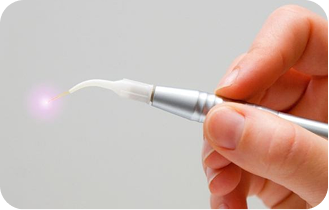
Photobiomodulation Therapy (PBM)

Our laser technology may be used to support healing, reduce inflammation, and improve comfort following treatment.

Craniosacral
Therapy (CST)

For infants and selected patients, Craniosacral Therapy may be recommended as part of a collaborative approach to feeding, oral function, and healthy development.

Collaborative Care

We frequently work alongside lactation consultants, myofunctional therapists, bodywork providers, and other healthcare professionals to support the best possible outcomes.

Frequently Asked Questions

Does every tongue-tie need to be released?

No. A visible tie alone is not a reason for surgery. Symptoms, functional limitations, age, care history, and the potential benefits and risks guide the decision. Recommendations may include monitoring, therapy, further assessment, or a procedure. Infant feeding concerns also need pediatric and lactation context. Read how function guides tongue-tie release decisions.
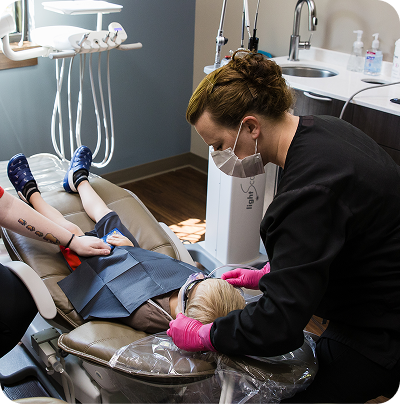
Many children show signs such as feeding challenges, mouth breathing, sleep concerns, speech issues, or oral posture problems. A comprehensive evaluation can help determine whether a restriction may be contributing.
Not always, but it is frequently recommended because it helps establish healthier functional patterns and often improves long-term outcomes.
Most patients tolerate treatment very well. We focus on comfort and provide detailed instructions to support healing and recovery.
Healing timelines vary, but most patients return to normal activities quickly while continuing structured aftercare and follow-up.
Yes. Many adults seek evaluation for concerns related to tension, clenching, sleep quality, swallowing patterns, or oral function.
Absolutely. Collaboration with lactation consultants is an important part of infant feeding support when appropriate.
We’ll explain our findings and provide guidance regarding the most appropriate next steps, which may include observation, therapy, or other forms of support.

The First Step Is
Understanding Function

Whether you’re concerned about feeding challenges, breathing patterns, oral development, sleep quality, or long-term function, a comprehensive evaluation can help provide clarity and direction.

Thank You

Thank you for reaching out. A member of our team will get back to you shortly!

In the meantime, feel free to give us a call if your question can't wait.

Call 715-778-5543